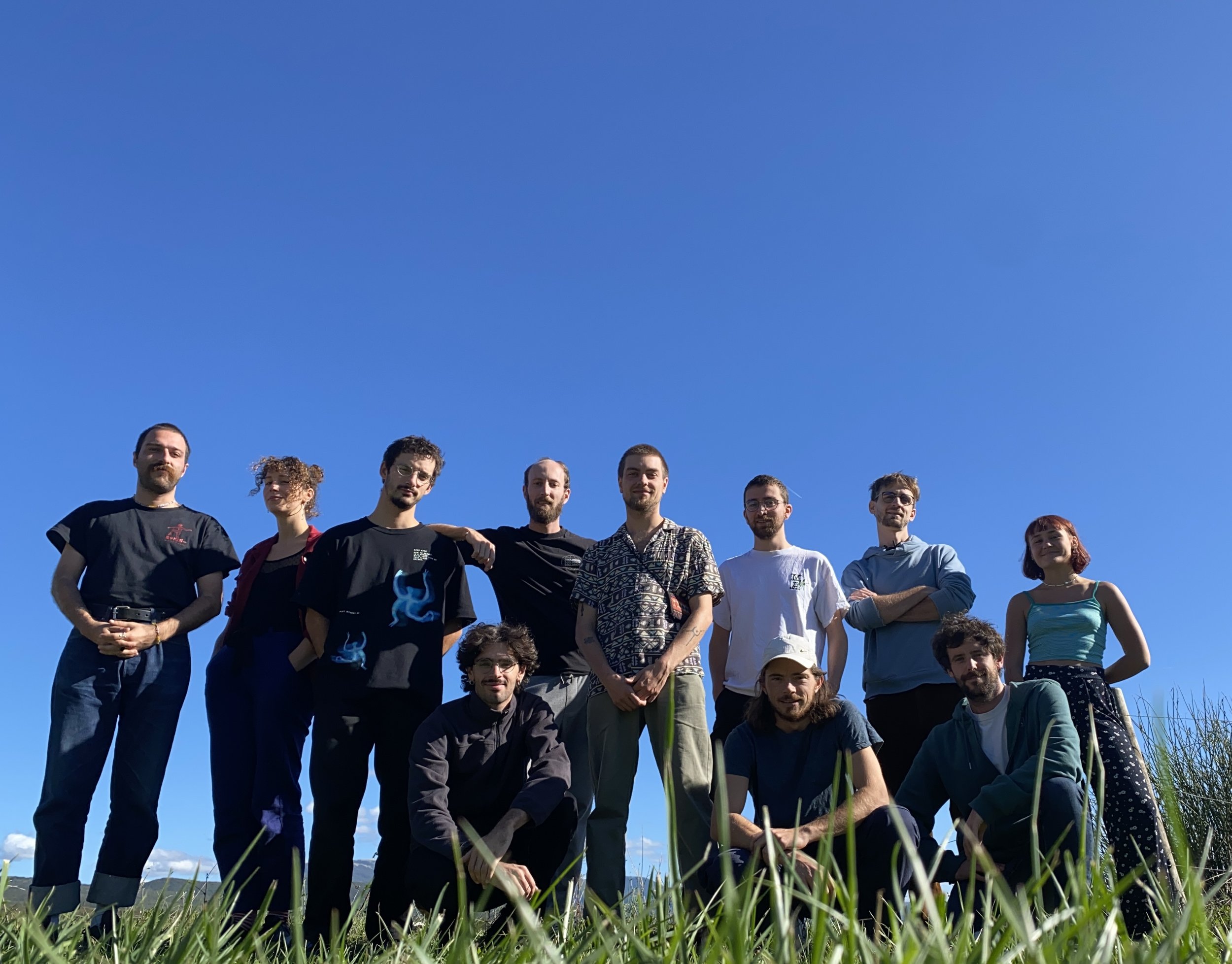
LABEL SPOTLIGHT: Polën
From London, we head southeast across the English Channel through the vast green pastures of France, to the foothills of the Alps. Our Label Spotlight series returns this month to speak with the founders of Polën, a fledgling label with a down to earth & refreshing musical curiosity, inspired by live collaboration, field recording & a desire to connect with the beauty of nature that surrounds them. Curated by artists Paul Rêve & Hidolas (Emi), Polën was born under the wing of Melifera, the French label & collective behind the beloved La Vallée Électrique gathering. It’s a festival we haven’t yet had the pleasure to experience ourselves, but we’ve certainly felt the effects of it ripple outwards, for example through our friends Klape Nunsen whose custom soundsystem was inspired by their experiences there. We chatted with the Polën founders about the ideas behind their label, their Biotope compilations & the associated artist residencies they were based upon. We also take a deep dive on Flegraí, an album by Hidolas with a visceral connection to an island archipelago off the coast of southern Italy.
As you start to read along, l suggest an audio pairing - the Space Drum Meditation remix off of Korean producer Okgwa’s album ‘Hayan Kkot’. The hauntingly beautiful album from the Korean artist was released towards the end of last year & very much embodies the ethos that Paul & Emi are intending to present with Polën.
Can you tell us a bit about the background of everything & how it all began? What inspired the two of you to start Polën? Is it directly inspired by experiences at La Vallée Électrique with the rest of the Melifera crew?
2 years ago, we both witnessed a rise in the French deep scene. A beautiful and talented community was taking shape, while also expressing a genuine desire to create and experience music with people, not alone. Most of us producers work by ourselves in our room or studio, and we wanted to tackle that.
Around that time, our close friends Arthur and Corentin, founders of Melifera Records, asked us two if we wanted to take care of creating and managing a sub-label of Melifera dedicated to slow and contemplative music, while the mother label would from then on focus on dancefloor-oriented releases. From this crossroad of thoughts and endeavors, and because we agreed on the fact that the purpose of a record label is above all to support a culture, we created Polën.
Since the very beginning of this adventure 3 years ago, the aim has been to leverage this rising scene, push the boundaries of ambient and downtempo with a fresh and modern vision - while paying respect to its history and culture, and to gather artists in an inspiring environment to create music together in real life, in order to build a strong, safe and benevolent artist community around shared values.
Basically, we aim to "spread the polën".
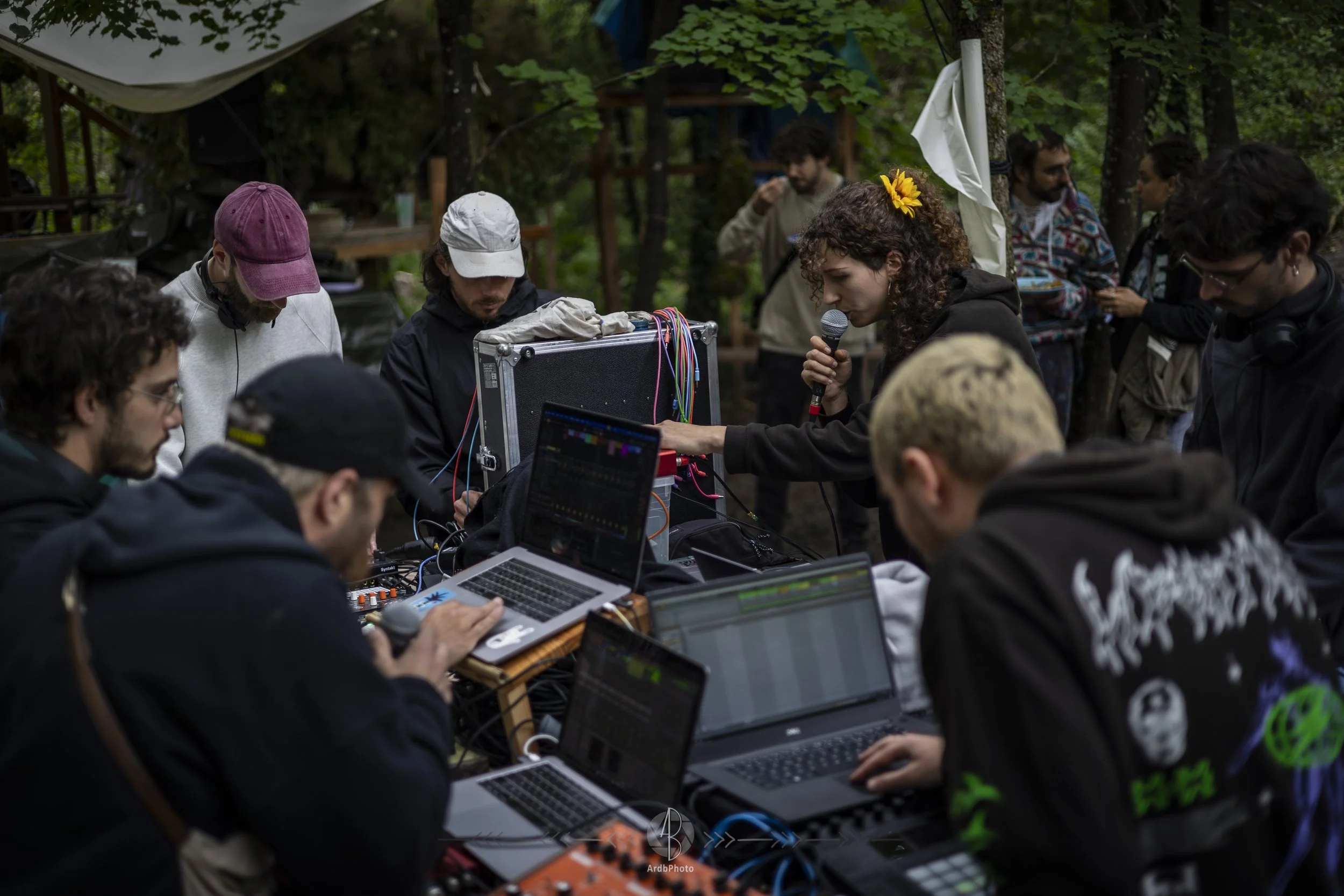
Back when we started, one of the first things we thought of was organizing a residency, as a starting point for the label and as a moment in time and space for having exciting up-and-coming producers gather, hang out, make music, reflect, and create a common voice for the label. And so we did, in October of 2024. We had good reasons to organize the first residency in the land where La Vallée Électrique takes place, in the south of France. Because in this lost valley lies the most peaceful little paradise.
Once a year, 600 people come and enjoy partying in it, and it is amazing, but they don’t quite pay that much attention to it apart from its genuine beauty. So we went back, but this time in a different season, with microphones instead of a sound system, and we contemplated the place in silence. We decided to work with an ethnobotanist friend, who helped us get a deeper understanding of our surroundings and, as he likes to put, “break through the green screen”. Lost in nature for a whole week, we took our time, and did things slowly.
Can you tell us a bit more about the story behind the name ‘Polën’?
In this valley, there are a lot of honey bees, mainly due to their symbiosis with the linden trees that grow there (have a quick look at apis mellifera). Melifera was named as a reference to the spirit of this valley's very special and fragile inhabitant. Polën is an addition to it, an echo to the lore and ecosystem of our scene, that spreads in the wind.
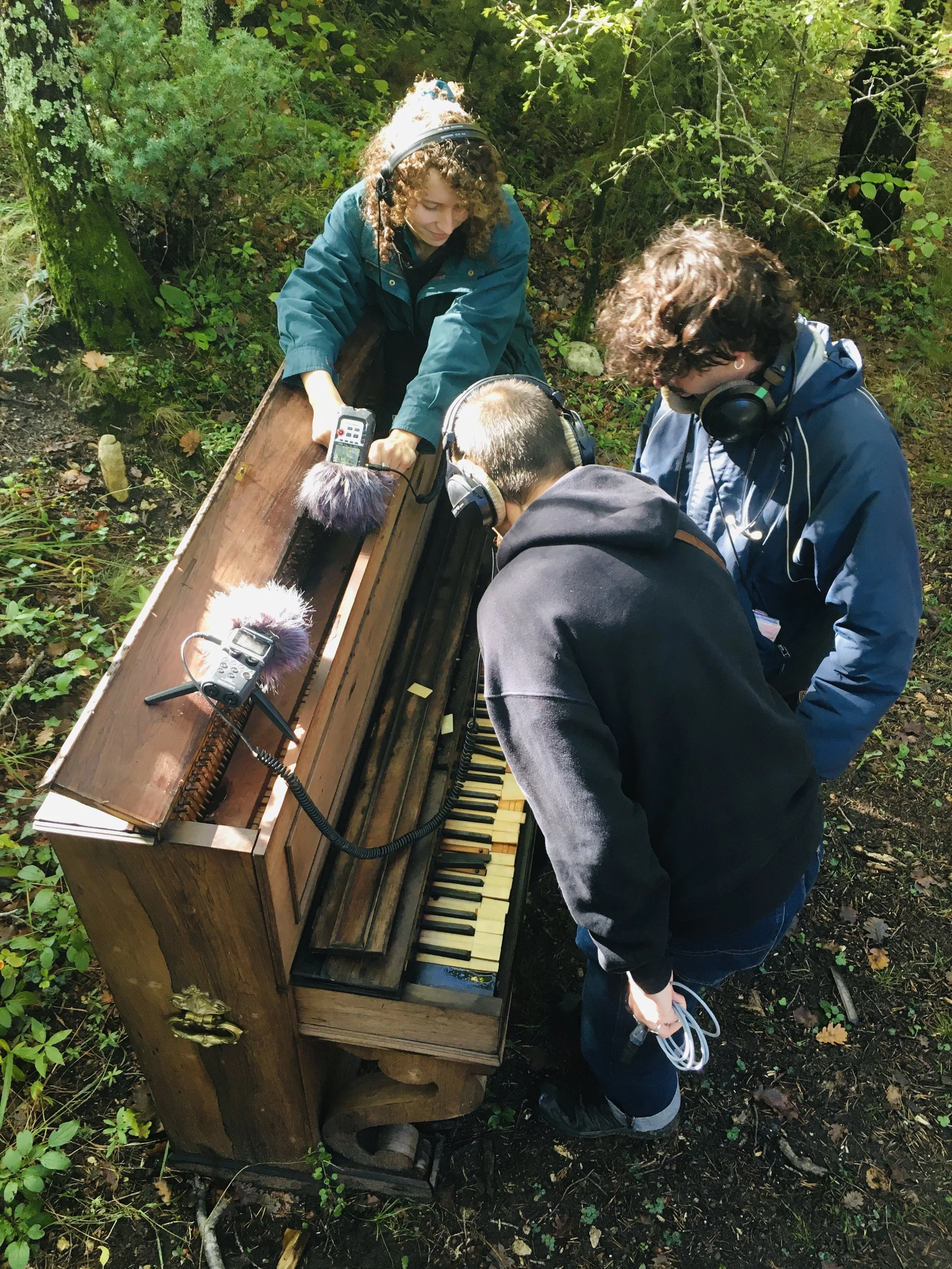
I love your residency concept, involving a shared time & place amongst a group of artists which then becomes your label’s compilations. Can you tell us a bit more about these residencies that are a core component of the label? How did you guys choose the group of artists that were invited?
First we looked at our close scene, not only among friends, but also among the artists who would really fit in and benefit from the residency, for this was as much an artistic experience as it was a human experience. We deliberately kept a pretty wide range of styles in the electronic scene, in order to stimulate creativity among the residents, while pushing them to get out of their comfort zone. We mostly selected artists who to a degree had at least some experience in producing and playing live, so we would all have a common ground to work from, while pulling each other forward.
Strangely enough, between workshops and dinners, from what were just casual jam-sessions during the residency, something very special happened. As we were jamming along one night, we suddenly thought: how fun would it be to do it on an actual stage? And so Biotope Live was born: a collective improvisation act, with up to 8 artists on stage at a time, and for two to three hours nonstop. The cherry on the cake was our first real gig at La Vallée Électrique in 2024, and let me tell you it was a moment to remember.
For the second residency that occurred in May of 2025, we changed locations to discover a new biotope, and we focused on being more gender-inclusive, more international, while still keeping consistency in terms of experience and knowledge, so that no one would fall behind.
We are now in the process of organizing our next residency, with new artists, in the spring of 2026.
Before we dive further into the Biotope compilations, let's first shift focus over to your latest album, Emi. ‘Flegraí’ which released last year is based around & inspired by the beauty of volcanic activity in the Aeolian Islands & the stark contrast between delicate life surrounded by forces of destruction. What is your connection to this region? Is it a place you’ve visited a fair amount or was this your first trip there?
My mother is from Sicily, and I have a bunch of family there. I had been to the Aeolian archipelago as a kid, and in 2024 I started working on this LP project inspired by volcanoes. Originally, I intended to go on every volcanic site along the African-European fault such as the Aeolians, Vesuvio, and Etna, but I lacked time and ended up going only on the Aeolians. So It became the main inspiration and source of samples for the project.
Can you take us through the production process of the album? Did it also involve live improvisation or was this more of a longer term, studio-based project for you?
The process was about producing music based on the samples I collected, the impressions and feelings I got on location, and the stories I read or was telling in my head throughout the journey. It is an in-situ thing, focused on creating an immersive experience for the listener that makes them feel like they are on the Islands. It was definitely more of a long-term, focused and detailed studio-based project.
Some tracks did take birth on the Islands, some of them in the following months, but it all really came together in the winter of 2025, when i gave myself a full month to only make music and finish the album. At the same time, I was also working on creating a small reverb device for Ableton, a free sample pack, and a short video. By March of 2025, I was done, and was ready to go to the next step.
Every track on the album contains several samples from the recordings on the Aeolians, and I tried as much as possible to have them either in the forefront as protagonists, or as the background for the other elements. Usually, it’s both. They give unity in texture and color, as they are the foundation for my sound on the album. It’s like choosing a few colors, and then having to paint with them. Only this time, electronics allowed me to create a dialogue between the organic and the mechanic, which I always like to experiment with.
Even though it is not clear with electronic / non-verbal music, there is also a strong narrative to the music I write, and how the tracklist is organized. For example, the first track tells the story of the volcano waking up, danger rising, and this mythic flute player coming to calm the volcano and put him back to sleep. The rest of the tracks tell about errance, tranquility, death, beauty, loneliness, love, and all sorts of things that came to my mind as I was roaming around the islands.
Where does the word Flegraí come from?
There is a caldera near Napoli where the volcanic and seismic activity is quite intense, called the Phlegraean Fields. When I heard about it while doing my research, I was instantly fascinated and really loved the sound of it, so I wrote it down in my notebook. The Greek meaning (“burning fields”, derived from the word φλέγειν “to burn”) was quite inspiring, so I just twisted it a bit, and it became “Flegraí”.
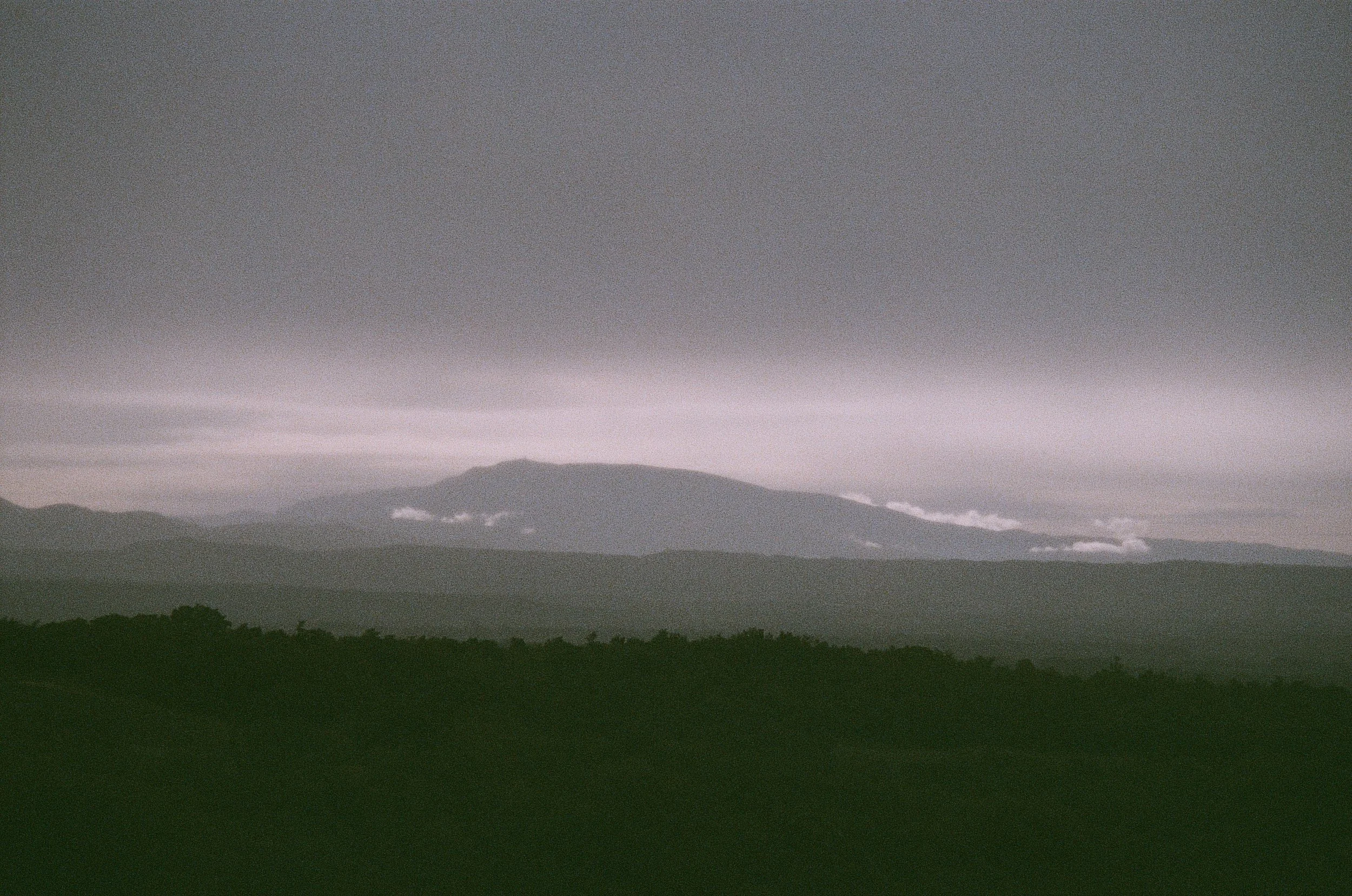
Talk to us a bit more about your field recording work - is this an integral part of your process as an artist overall? I’ve really enjoyed using field recordings in my own work, as a way to give a track a connection to a time & a physical place. How would you describe your approach with field recordings - is it also about time & place or for you is it more about seeking texture & raw, organic sounds that can’t really be replicated with hardware & plugins?
I always use field-recorded elements, whether it is for backgrounds, textures, percussion, even leads. They are an infinite source of inspiration and novelty. I also constantly try to intertwine natural and electronic timbres, blurring the lines between them.
I can totally relate to your approach to field recording, as it is exactly what I aimed to do with Flegraí: telling a story about a place through its sounds, and allowing listeners to immerse themselves in that very location. The field recordings are the backbone, and the music is the story.
For me, field recording also teaches you to pay attention, to be patient, to experience the world through a different perspective, and to really dive deep into the world of sounds. I’m also quite interested in bio-acoustics and sound ecology, both of which influence the way I approach field recording and how I make music.
Ultimately, field recordings carry a memory of a place, a feeling, a moment, a panorama, and that’s what I love about them: I can directly relate to those sounds as a human being. Natural sounds (that is, geophonia and biophonia) are what we have been used to hearing and have listened to for thousands and thousands of years, until the industrial revolution. So introducing them to the chaotic and complex qualities in electronic music, which is the sound of modernity and machines, is for me a way of allowing a greater connection to the music. It’s like being in the city surrounded by traffic, but suddenly hearing birds, or a water stream, unconsciously being soothed by the familiarity and liveliness of it.
Now that we’re on the topic of field recordings, let’s circle back to your compilations. In Biotope Season 01, the use of field recordings was almost a binding rule, a way of anchoring every piece to the same terrain. Did Biotope S02 follow a similar framework, or did you allow the artists more freedom in how directly the environment entered the music?
The field recordings remain a binding rule, yes. That is also why each compilation begins with raw field recorded material: to let the listeners immerse in the biotope, before discovering the musical interpretations of it.
However, the artists keep total freedom of how they wish to tell the story they want to tell. So how the environment enters their music is entirely up to them, each having their own techniques, inspirations and methods. The point of the residency is to share those through various workshops and exercises, find ways of exploring the living world musically (both in figurative and non-figurative ways), create a common language, before going into the actual composition of the track that will eventually be on the compilation.
In a way, it’s like every track is a snapshot or a reminiscence of the residency taken from a different perspective and with different vocabulary, but you can tell from listening to each compilation that there is a similarity in the overall sound and mood.
This first compilation was rooted in a very specific place & a shared act of listening. With Season 02 emerging from a different biotope & a more international group, how did the change in environment reshape the music that came out of the residency?
The intention remained the same: explore the living world through all five senses, and make music out of the collected smithereens of sound, color, emotions, shapes, smells, etc. So the music that comes out of the residency hugely depends on what unravels during that time, how we influence each other inside the group, and what inspires us from the local biotope.
The first residency was a founding moment for Polën in which we aimed at finding the label’s voice and experimented a lot - and we also became a group of close friends. Biotope Season 2 was an extension of it, using new or updated frameworks, with mostly new people but also friends from the first residency and, of course, in a new location.
So the combination of the people and the biotope is what makes each residency unique. It is purely an in-situ process. We create a system (the residency), but we are completely dependent on things that are not in our control: the weather, the landscape, the energy of the group. Change one element, and the whole balance shifts.
This is also why we might end up going back to the same location for Biotope Season 3 as we did for Season 2: it would necessarily be a completely new experience for everyone.
Looking at Biotope as an ongoing series rather than a one-off project, what do you hope listeners will start to recognize when they see a new Biotope volume announced? Is it a sound, a method, or a way of relating to music & place?
For us, it would be a way of listening, and so by extension, a way of relating to the world. Taking the time to contemplate, to listen deeply and observe quietly, instead of rushing things. The Biotope compilations are small fragile worlds that demand to be listened to from start to finish and, just like when we do field recording, requires a calm - almost meditative - attitude in order to be experienced at the fullest.
So it is not about just offering a relaxing experience to escape normal life (whatever that means) before quickly going back to it, it is about listening truly - to yourself, the people you care about, your environment, and to all the voices that remain unheard under the human noise.
This is what we try to convey, and hopefully people can grasp that.
Polën’s Biotope Season 02 is out now on Bandcamp. As a token of gratitude, Paul & Emi have offered our readers a promo code for their latest Biotope Season 02 compilation. Type in “polen20” upon check out via their Bandcamp for a 20% discount.