
In Conversation with Martin Gilleshøj (Kune Festival)
Interview originally conducted in Danish
At the end of last year, on a cold and dark December night, I was walking the streets of Copenhagen heading for Proton Records for some welcome warmth and inspired vinyl digging. Alas, it was the last day the store would be open after five years running. It had been a place of community and of curated electronic records, where like-minded people would meet, chat, listen, discover. Hot tunes were playing through the speakers that evening, and the place was buzzing with visitors until closing time. I could sense the warmth, not from being inside but from the dedicated staff and the history of the place. The co-founder was Martin Gilleshøj, who invited me to his home a few months later to talk about some things dear to us both: music, culture, and the Scandi perspective.
“It’s sad that it had to close.” says Martin about Proton Records (2020-2025). “When we started Proton Records to fill a void in Copenhagen, we gave ourselves five years to figure out if we could get somewhere with a view towards salaries (because people were working on a voluntary basis with other jobs on the side). The shop was doing well in itself but not to the point where it could generate salaries to a level that was required. It was a different kind of capital one got from working there, such as a network and music knowledge - when running a record shop, there has to be a drive to find records and to construct something together, like an access to discover music.”
That enthusiasm and inherent drive for co-creation to further culture are traits that describe Martin well. And the familiar feeling from the record store months earlier carries over to his kitchen table as Martin offers me a coffee.
“I’ve worked quite a bit on a voluntary basis to create something in the electronic music environment in Copenhagen; whether it be parties, record shops, or festivals, and DJing of course. So it’s the drive that just motivates me, in itself.”, he says. He always had that interest in music, in culture, in generating the new. “I first started DJing when I was 24, and I quickly realized that this was the way I wanted to go with my career - creating events and putting things out into the world within culture in general.” I dare say this goes beyond a way of doing, for Martin, to a way of being - which is when authenticity shines. One can hear it in the way he shares his view of the local music scene.
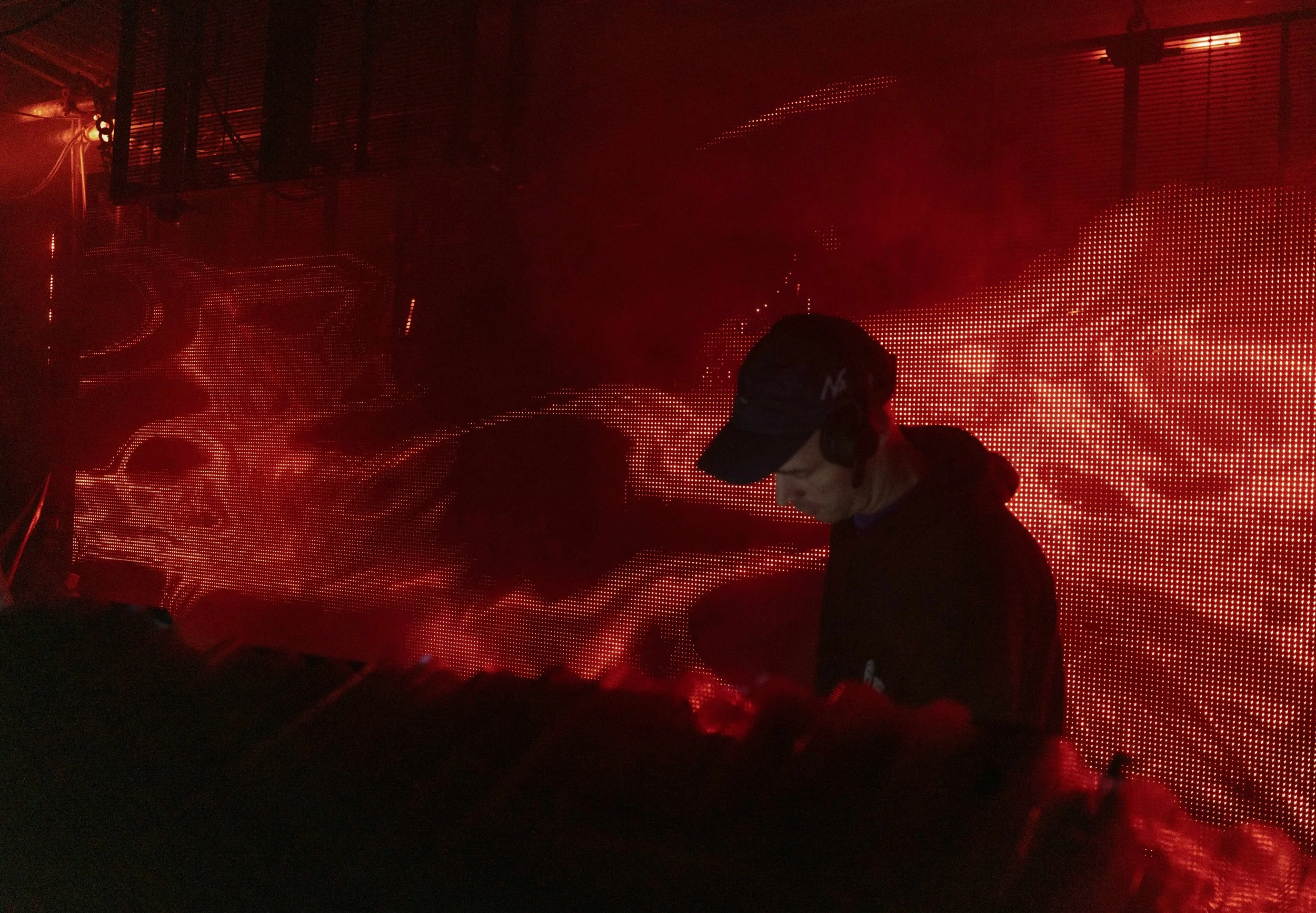
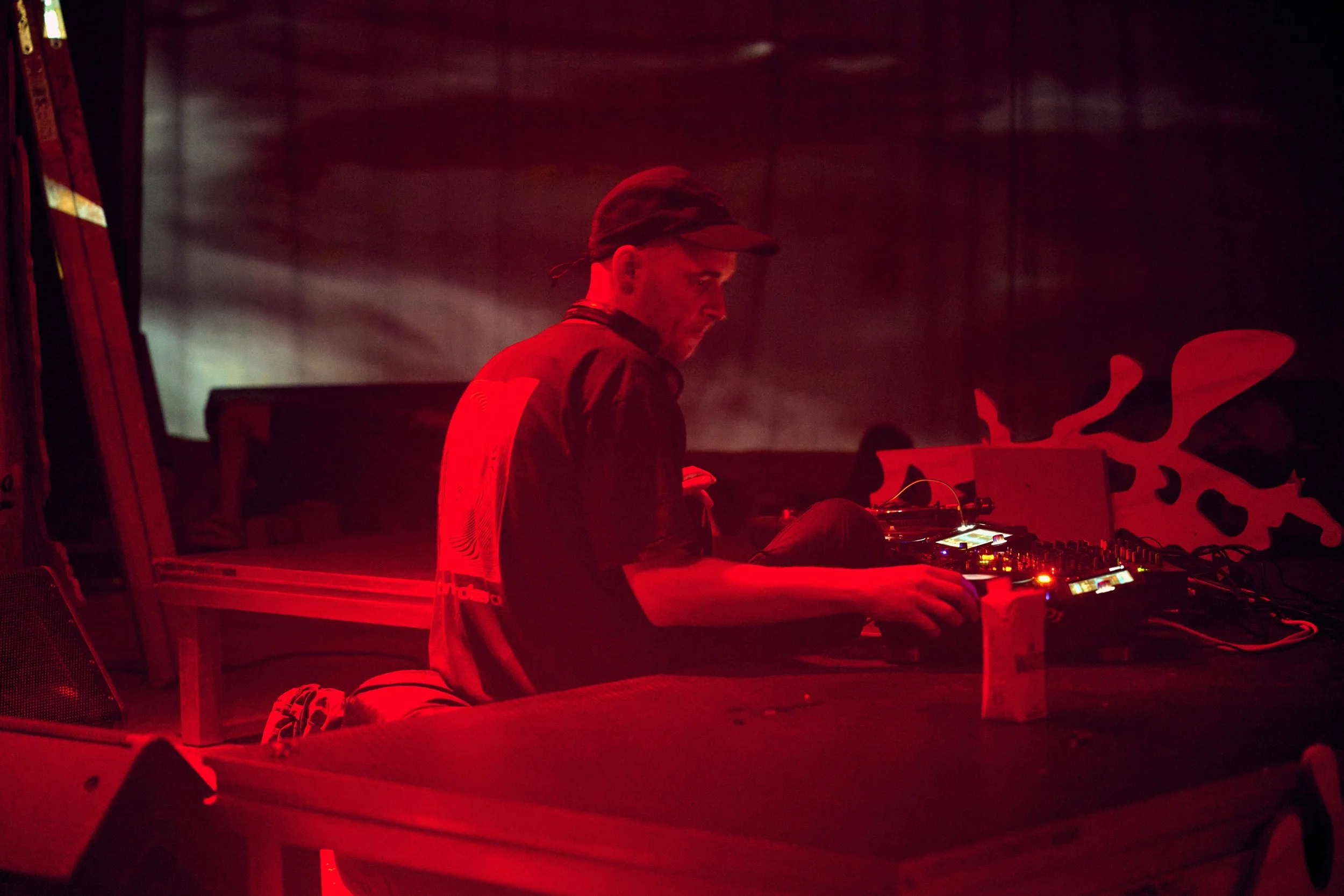
“A big part of the thriving scene you see in Copenhagen today is that there’s been a number of people who have invested a lot of their time over the last 10-12 years (and of course also before that) to create parties, hubs and electronic music related culture. It’s vital for the scene and ecosystem that there’s a healthy balance between the DIY culture and commercial clubs, and also that people in the newer generations create something of their own and outside established spaces. There’s a huge number of new DJs, which is cool, but sometimes the balance between DJs and gigs is off and here it’s important that also aspiring DJs form crews, make parties, and lift some speakers. Everyone has to contribute to get something in return”. Put like that, it makes sense.
Let me take you on an aside and introduce you to Janteloven, or the Law of Jante. It is a set of fictional rules laid out in the satirical novel A Fugitive Crosses His Tracks by Aksel Sandemose (1933) that has seeped into Scandinavian culture as a social code of conduct. While such rules should never be taken literally, the modest egalitarian nature of Scandinavian society is reflected in them. We see traces of it in people’s mannerisms and the way things operate. Perhaps we can take Kune Festival as an example, where Martin is currently involved in music curation.
Every other year, and in August 2027 for the sixth time, those in the know gather during five long summer days and nights on an island off the Copenhagen coastline. For this moment in time, the island (Ungdomsøen, Middelgrundsfortet) is just for them. Bodies move to the sweltering beats emanating from four different stages: Beach (delivering daytime warmth), Vessel (with high currents for late-night intensity), Space (owning the deep & hypnotic grooves), and Astral (with ambient & experimental DJ sets, live sets and performances). The program is diligently curated so that festivalgoers are accompanied from start to finish, both at and between the individual stages. Since its onset, Kune has been primarily self-funded (apart from a few donations, though some more couldn’t hurt). Everyone who helps make the festival happen works on a voluntary basis, except for the artists - who are all offered the same fee. This will attract artists who want to share their time and music for such an event, for the purpose of being part of it. That is also what makes the unique culture around it.
Kune is described as a one-of-a-kind celebration in Scandinavian subculture. It has been quite word-of-mouth for now, which has contributed to a good experience for the 1000-1500 attendees. With festivals galore, I ask Martin what he thinks makes it distinctive.
The location of Kune is completely unique, and it is a festival with a strong focus to feature local talents in the lineup - both aspiring, as well-established. That’s been the vision in any case. There are many people who do parties in Sweden, Norway, or Denmark. But there hasn't been this sort of gathering potential. So the idea is to create this communal place and listen to each other, inspire each other... not just for music but also humanly.” It’s really about meaningful exchanges, which apart from quality curation and organization, also makes a festival memorable.
Around 40-60% of artists booked are Scandinavian, others coming from as far as Australia. “What we have seen is that some of those who played at Kune got booked at other festivals or in clubs. So it was great to witness that we helped create some connections through the festival. We also have been focusing on building bridges between up-and-coming artists and the more established ones.” These types of connections seem important to keep the scene thriving. Looking back in time, we can see how such encounters were significant for Martin as well.
“Immediately after I started DJing, I met the crew from Fast Forward Productions [Copenhagen, 2015-2025] - who were very involved in creating the scene that is part of Copenhagen today, amongst other things.” Of course this was along with many other crews and efforts that have shaped the Copenhagen scene over the years. But the relationships that Martin has had with the Fast Forward crew have been quite seminal for him, even during his time abroad.
“I had been travelling in Georgia a few times before I played at Bassiani (Tbilisi, Georgia). These visits connected me with the crew of Vodkast Records (Tbilisi, Georgia), who invited me to play at one of their parties in Horoom (Bassiani) when I was living there in spring of 2022. A year or two later, I got booked to Bassiani again and was featured amongst the Fast Forward showcase at the club.” Martin has played there regularly since.
“Bassiani is a club where you can express yourself and play a lot of [different] music. The people in Georgia are also very attentive. So you can end up playing these long sets where you are able to go off on tangents…There’s the dancefloor, there’s the sound, and you are in it. Understanding the circumstances one is playing in is such an important aspect - whether there’s a need for something that lifts the energy, something more minimal that leaves space to rest the mind in a different way, or if there’s more of a mood for a party. I do think I’m very attentive to my surroundings, whether I’m at a café or in public, and I can use that when I play. At the same time, I do have a general idea of what I want to play and I like to be in control of that while also being in touch with the crowd - which is especially possible in smaller rooms or at smaller scale events.” Martin has found his niche.
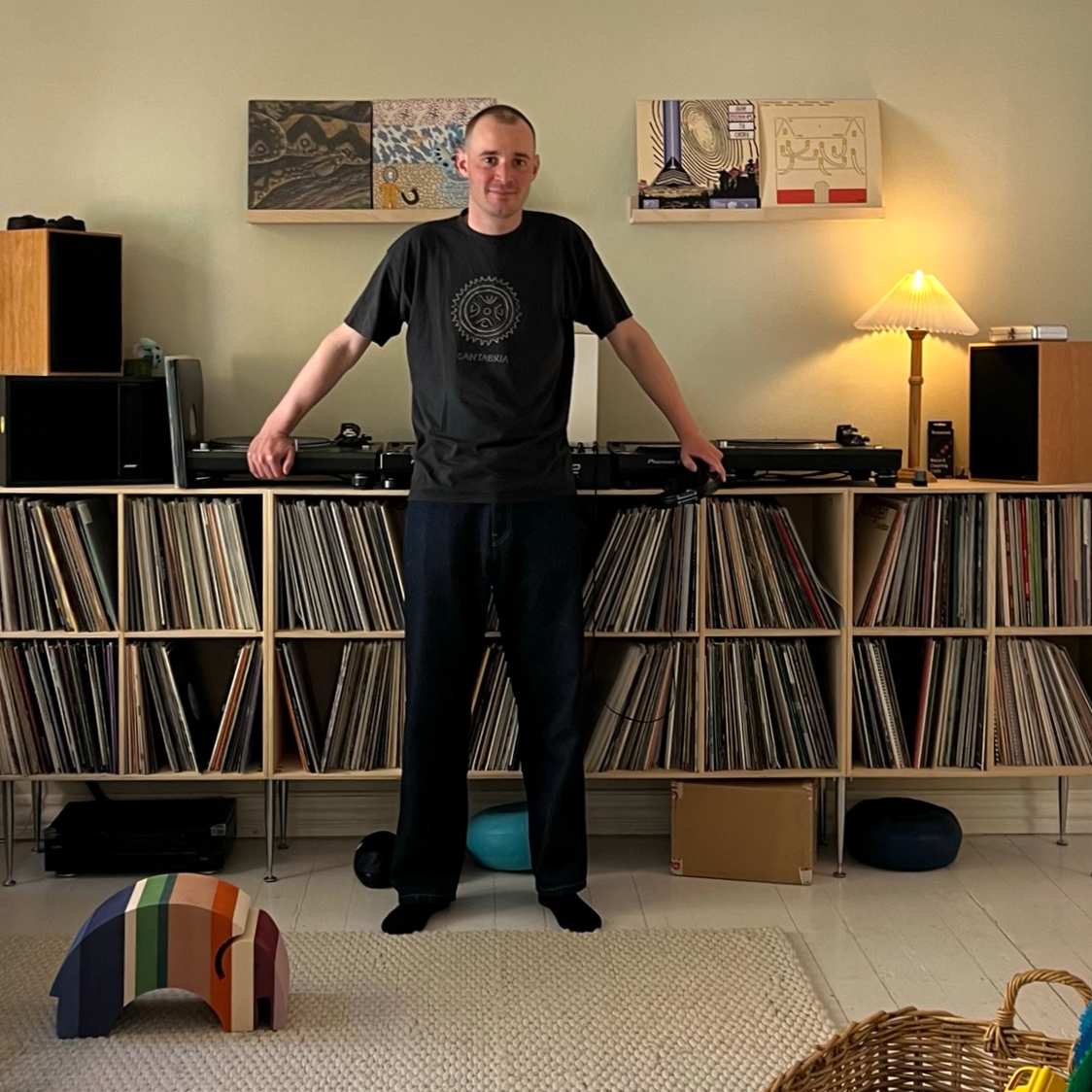
It may have initially taken some time for Martin to build his base in Copenhagen, where he is now making leaps off from with recent bookings at events like Ormbolet Festival (Norway) and Sanctum of Sound Festival (Berlin). His curiosity and years of discovery have given him a wide repertoire to draw on when he plays now. “I’ve been very fascinated by diving into a lot of different music. That’s what I was a bit frustrated with in the beginning. I found it hard to create a flow or a connection with other [artists] who were a bit more specific in what they wanted to DJ. I think that forced me to keep an ear out for those components that can link tracks, and over time it has given me a bigger playing field.”
I mention his vinyl collection that lines the wall of his living room. “I’ve become more aware of how one's selection over time makes something more personal”, he says, “It’s also the case with digital of course. But there’s just something about going into a record shop - there will also be older things there that will not have been released digitally. And then you can investigate more and find something digital.” The discovery of music in its many forms can be quite inspiring, while holding the music in one’s own hands can feel grounding. “I find [vinyl] to be a very meditative format to play. There’s the tactile aspect, and it’s fragile. When you’re in a very good flow then you can really melt into it. I also like playing digitally in a different way - you can sometimes put a little more energy into it, or you can do things that you can't do on vinyl. But [vinyl] is what I started out with, which has shaped my temperament.” I can sense that in his calm demeanor and thoughtful gaze.
In his more recent sets, Martin is trying to draw links to the deeper and more psychedelic side of music. It’s the type that is perhaps more patient and introverted, and hasn’t been as popular as faster music in Copenhagen over the past years (which has been influenced by punk culture that is in some aspects more energetic). But what he’s observing is that there is a shift in energy or return towards this slower form of music.
Is it a sign of the times, or of our generation, I wonder? Martin is a father to a sweet little kid, which brings other priorities and a different lifestyle than some years ago. Personally, I am also in a phase with a clear need or want for intimate connections, meaningful music, and microfestivals over the opposite (although one does not exclude the other). And so it becomes about quality - of sound, of music, of relations, of time spent. And we become selective, it seems, while aiming to stay open to new inputs and ideas. Martin has to be selective about the gigs he can take on, but they also become more intentional to him, and he is grateful: “I can feel that more is on the line when I go and play now. I need to plan a lot for family life. This has opened my eyes to the quality of the things I do [and] it means a lot to me that I get to play [so] that when I am out, I enjoy it extra much.”
Martin has a vision for which direction he wants to go, which music he’d like to hear, which artists he’d like to see, which events to establish, as well as a desire to support others on their own paths. It’s something that comes naturally to Martin. His drive and creativity are born from "...what I see when I’m traveling, and what I dream of - a combination of inspiration and [curiosity].” Some of these dreams are unfolding in a personal project of his - to release music of artists he has a connection to through his nascent label Buttheads. “I find joy when others create something and bring new things to the world, and that’s also part of it for me when starting a label or creating events. There are plenty of great things that have happened in music, yet there may also be some things that one misses or would like to see more of. And that’s when it’s cool to see others create something.”
The first release on the label was with Mei Yuxin. “I got to know Mei because we booked her for the 3rd birthday party of Proton Records. And we were pretty captivated by her and her very distinct sound. She is one of those artists who produces and also plays live, she combines western traditions with a classical music background.” They worked together on the composition and fine-tuning of the album. Martin had an idea of the visual part of the album, which he talked about with his graphic designer. "Mei had the idea of adding a laminated leaf, such that each vinyl album would come with an artefact or relic. She was very cool to collaborate with, and it has inspired me to add a relic to each new album. I’m not the kind of person who has a big masterplan, I tend to let things stay open. But this concept of having a physical thing with each album, might just be something I’d like to keep doing.” Martin hopes to be able to do two to three releases on Buttheads per year (you can look forward to a trancy or progressive release towards the end of the year), and once it’s a bit bigger, to have a label night abroad someday. If we are talking about hopes, then “a long-term dream,” he says, “would be to play at Panorama Bar, [but] you don’t know when these things will happen.” He embodies calmness - his ethos is “to be patient that things will happen…if you just do things from a clear heart and keep doing you, then things will [fall into place].”