
Delayed x Never Late: Gëinst
Our eyes open & awareness returns. Grasses begin their rapid upward trajectory in the start of the growing season. Trees sprout hundreds of eager buds, ready for their transformation into nature’s solar panels as the sun radiates warmth through the canopy. On the ground floor, plants begin their ascent from beneath the thick coverage of dead leaves from season’s past & delicate flowers bloom as pollinators fly from bud to bud. The long hibernation has come to a close & spring is all around us.
The last time we spoke about our friend Gëinst, the long, dark winter was only just beginning. His music guided us through those icy months, with the early December release of Hiber Trace on our own Never Late. Musically it represented some newer territory for us & the label - dancefloor territory but peripheral & experimental. I remember when we first heard the demos & how immediately they grabbed our attention. The tracks on the release are on the longer side, but Gëinst has a way of keeping things alive & in constant motion so that they never feel stale, not an easy thing to do. His years of live performance experience is very apparent upon listening through, which is something I’ve wanted to talk to him about in the form of an interview. Below you’ll find my conversation with him about that topic as well as what it was like growing up in France in the 90s, his process in the studio, & more.
The French artist also shared a mix with us, months ago, as his submission for our Delayed x Never Late mix series that coincides with our label releases. It felt fitting to share this mix after the winter’s rest, during a time when spirits begin to lift & energy returns all around you. Gëinst is a sharp selector & has crafted a musical journey that builds flawlessly, getting you on your feet as if you were in the early building hours of a night out. The energy is analogous to this period of spring in New York, as life wakes up gradually, day by day & then all of the sudden there is green everywhere you look. Listen along as you read the interview & don’t forget to check out Hiber Trace on our very own Never Late.
Let’s start from the very beginning. We’ve known each other for a little while now but I’ve realized I don’t really know anything about your background & musical upbringing. Where in France did you grow up & when / how did you first start getting into electronic music?
I grew up in the center of France, in the city of Michelin tires, or the French D3 as my brother used to call it. Pretty much industrial but with a lively cultural life and a fantastic countryside surrounded by a chain of volcanoes just nearby.
As an MTV-generation kid, I was fed numerous clips from the 90’s, which awoke the first sense of electronic perspectives to me, especially with the French Touch classics. I started to develop a more accurate liking for electronic music during my early teenage years. At that time I was evolving into a classical conservatory kid for few years already, but the tough teaching and repertory were far away from my musical intentions. In the meantime my brother was very into James Stinson and Gerald Donald works, which is what drove him to pick this strange fluo vinyl cover owned by our dad from 4 guys from Düsseldorf. I think this is the first memory of a record I have in which I could not identify any classical instruments being used, and from this point I felt the need to understand the process behind this music. Shortly after this, my brother started producing his own hybrid hip hop instrumentals on Fruity Loops, so he taught me the basics and 1 week later I had done around 20 projects… this is where it all started basically, on Fruity Loops with a small 25’ midi keyboard and a cheap laptop from my mom’s work.
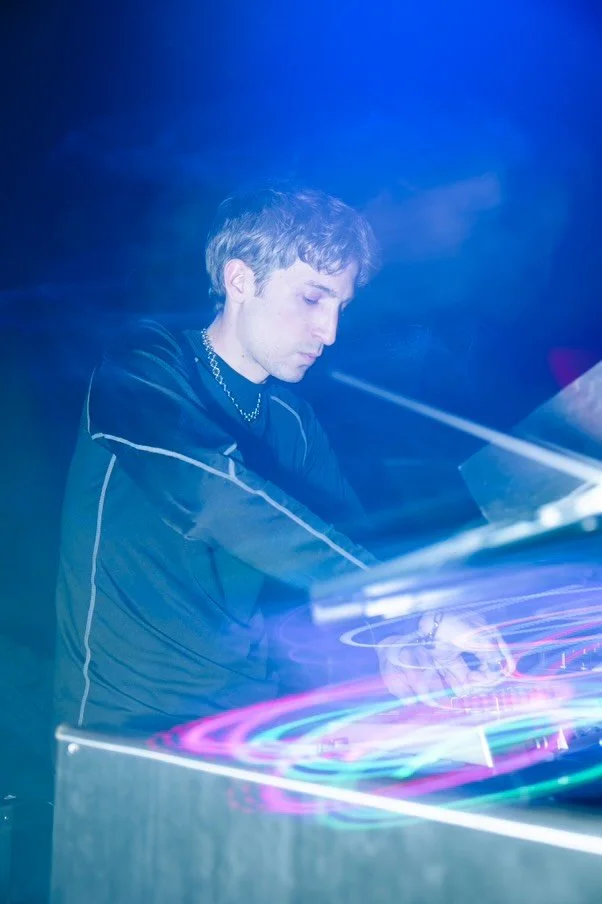
What is your current studio setup & what were some techniques / pieces of gear that were featured prominently on Hiber Trace?
Regarding my studio, I try to understand the philosophy behind each unit I use. I cannot consider myself a proper nerd, as it generally takes me some time before I fully master a new piece of gear. Over the different instruments I have accumulated in the past few years, modular has surely been a turning point on my musical practice by extending my panel of textures and synthesis abilities.
On Hiber Trace you can hear some modular recordings from the Make Noise DPO, as well as arpeggios or pads from my Arturia PolyBrute, while most of the rhythms are sequenced with my Jomox Alpha Base or played on a Nord Drum. Also an analog delay by Erica Synths is used in almost all the tracks of the release, for creating background elements like buzzing drones.
All the instruments are recorded through a mixer, inside which I do a pre-mix and then record pretty fast in order to keep the liveliness of the jam. I love tweaking long sequences which allows me to create some serendipity afterwards during the editing on Ableton.
This is something that caught our ears right away with your music, this ‘liveliness of the jam’ & these longer length tracks that really do not seem long when you listen to them. Do you have a concept in your head for the structure of a track before you record it live on your mixer, or is this more of an intuitive thing based on feeling?
As I mentioned, long sequences have became an important part of my workflow, and I’ve found they’re the best way for making beautiful errors happen.
Several ideas are already showing up while jamming indeed, that’s why I used to record a master channel before recording each channel separately. It allows me to save some intentions while playing all the instruments at once, so I can remember later on during the editing.
Every channel doesn’t need to be necessarily long, but at least 3 or 4 can create this surprising lively narration when you listen to them all together. So I would say it is a mix of both, a place where I converge my love for tweaking live instruments and the enjoyment of editing tracks, but the main idea is to let those sequences speak as a living organism.
Hiber Trace has a distinctly wintry, crisp atmosphere. In our premiere write-up, we even described it as “cold & sharp, beautiful & pristine… like shards of ice moving through a body of water”. Did you have a specific concept or mood in mind while creating this release? What inspired the title Hiber Trace and the feelings you wanted to evoke with these tracks?
The idea of Hiber Trace is that you are collecting the tracks as sediments that the artist would have left behind after a long creative process. It is basically a witness of time and of the numerous states of mind he had passed through like: euphoria, frustration, loss, determination, hope…
Winter has always been my favorite season to produce music, when the days gets shorter, the air colder, the light subdued…Then you know that the time has comes to lock into the studio for some introspective sessions, which will make you dive deep inside your mind and explore new horizons
I could not deny that the atrocities across the world have affected me a lot lately, and music being an outlet for me, some of the tracks surely relate to this anxious feeling. This is also the reason why I wanted to implement some hope as well in the LP, with an entire track like Murmures or through adding a calmer part at the end of the tracks, like in Mugen for example.
How do you approach making music that works in a club setting versus something for home listening? The tracks on Hiber Trace pack a lot of detail and atmosphere, yet they also have the groove and energy for a sound system. Do you consciously try to strike that balance when producing? Do you get to test out your tracks in clubs before making a decision to put them out?
It depends on the track I am working on, but I would say that I manage to do it most of the time, as I think that it is pretty natural for humans to search for the right balance. I used to compare music with food quite a lot, so let’s say you are in love with ramen, you will still need to feed your body with different food to stay healthy right? Well it’s the same with music to me, there are tons of things I still want to try out, mixing genres and techniques, blending different influences from trips, talks, dreams...
I don’t want to dedicate myself to only one aesthetic. For now I still like to make dance-oriented music but it’s important to me to propose both formats, sometimes even inside of the same track. My current studio doesn’t allow me to work as loudly as I would like to, so before releasing new music I try to listen to the tracks on different sound systems, as loud as possible :)
Your music sits at an interesting crossroads of deep techno, ambient, and IDM, where hypnotic rhythm and atmosphere feel inseparable. Early on you talked about being exposed to a very specific strain of electronic music through your brother, and about that moment when sound stopped feeling tied to recognizable instruments. Looking at where you are now, what have been the key influences shaping this sound? And more recently, what’s been inspiring you within the current scene? Are there particular artists, collectives, labels, or gatherings that feel especially vital to you at the moment?
I got bored at some point with the techno scene which is constantly asking you to produce strong tracks for dancefloor purposes only. It made me quit the scene for a while because I wanted to focus on different aesthetics that I could listen both at home or on a dancefloor. That’s why I am more into festivals or intimate venues at the moment, as I need spaces that offer a free playground to express whatever you want.
I think we need more times to share all together and get the proper immersion to fully embrace the real power of music, instead of nights locked in clubs that are too short. I had this amazing feeling at Waking Life a few years ago, and more recently at Ouroboros. Both festivals are taking place in intimate venues surrounded by nature with a crowd truly dedicated to music. Mostra or Parallel have also become unmissable rendez-vous, places where you can connect with friends, discover new talents or enjoy your favorite artists playing on a proper sound system.
Artists like Efdemin have been an all time source of inspiration for me, his last album representing perfectly the balance between club-oriented tracks and a more home-listening session. I would mention as well the work of people from Carrier to Priori, or Katatonic Silentio to Lemna, for whom any of their works bring me inspiration to make music and try new things out. DJs like Garçon, Upsammy or Patrick Russell have enlightened my scope as well, according to my definition of what a DJ should be.
In regards to labels, they are pretty much related to all the artists mentioned above, but in my daily life consumption, I could buy any of the records from Music From Memory.
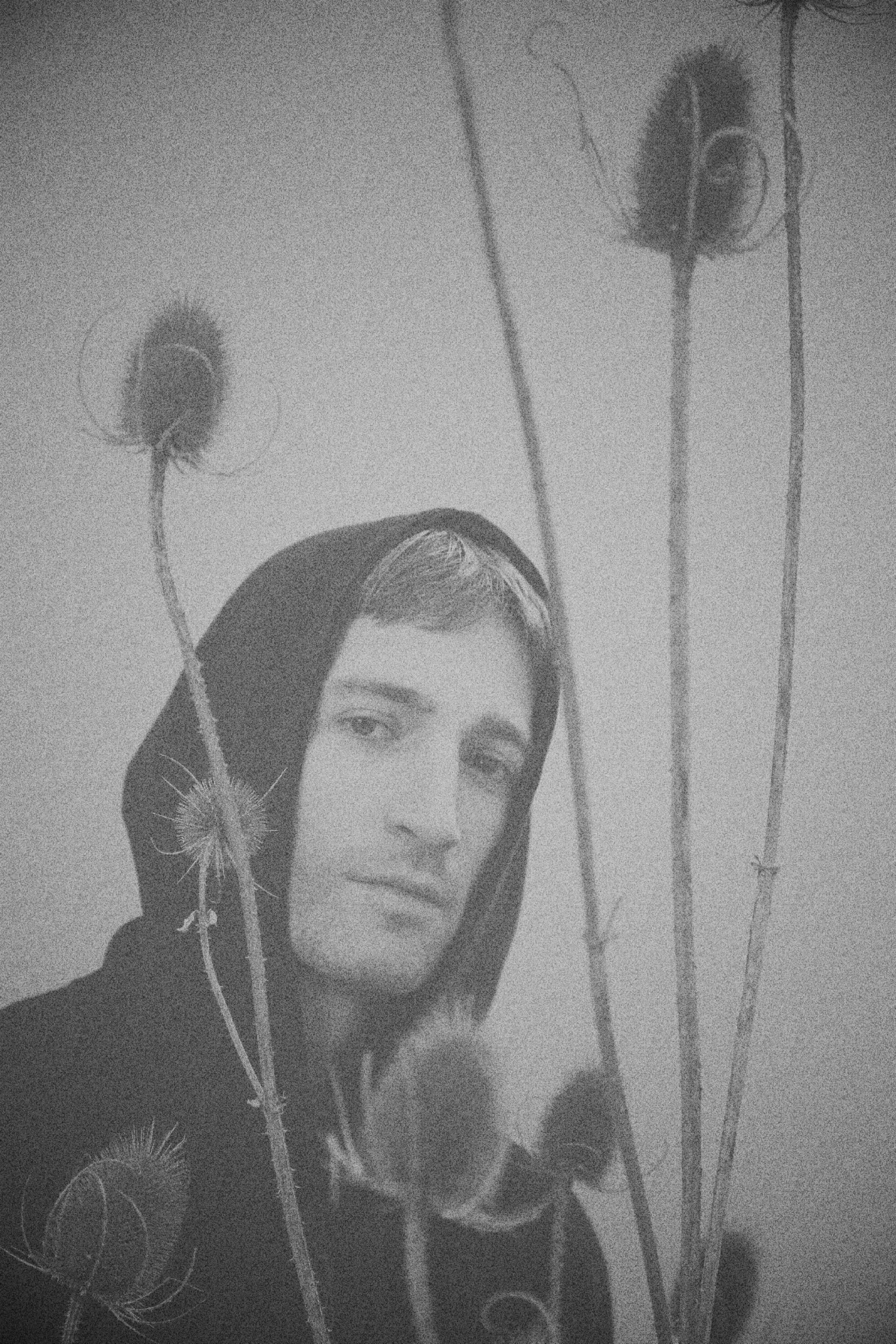
Can you tell us about the idea behind the mix you made for us? What equipment did you use? What is your approach when making podcasts? Do you record it in one take, or do you go back and work on it afterward?
I like to create progressive mixes, similar to warmups on a dancefloor, I love to develop the intensity over the mix, especially from downtempo to faster vibes. I never record it in one take, actually I could say that the process behind the mix is the exact opposite way of how I compose my music. I start with 3/4 tracks, then put it aside for few days, then get back to it, switch some tracks, make loops/cuts/warps, and let it rest again.
After 1 week if the mix is still relevant to me its ok. I usually mix with unreleased material from myself, tracks from friends, some upcoming releases or freshly released music and all time favorites. I am using the precision of a laptop to put together something that couldn’t be made on turntables.
Lastly, what’s on the horizon for Gëinst after Hiber Trace?
There is an album to be released in the following months on a new sub label, with a blend of tracks from the past and more recent stuff, after all a good way to move forward and focus on new music while I have still tons of music unreleased so far.
After this there is a world where melodic stuff would be separate, on a dedicated ambient project and dance music would become more experimental and rough, but I am very flexible so anything can happen to be honest ahah.
Also after a long break I now feel the need to get back on stage, so I will work on it in the near future. As for us we will gather in front of the speakers.